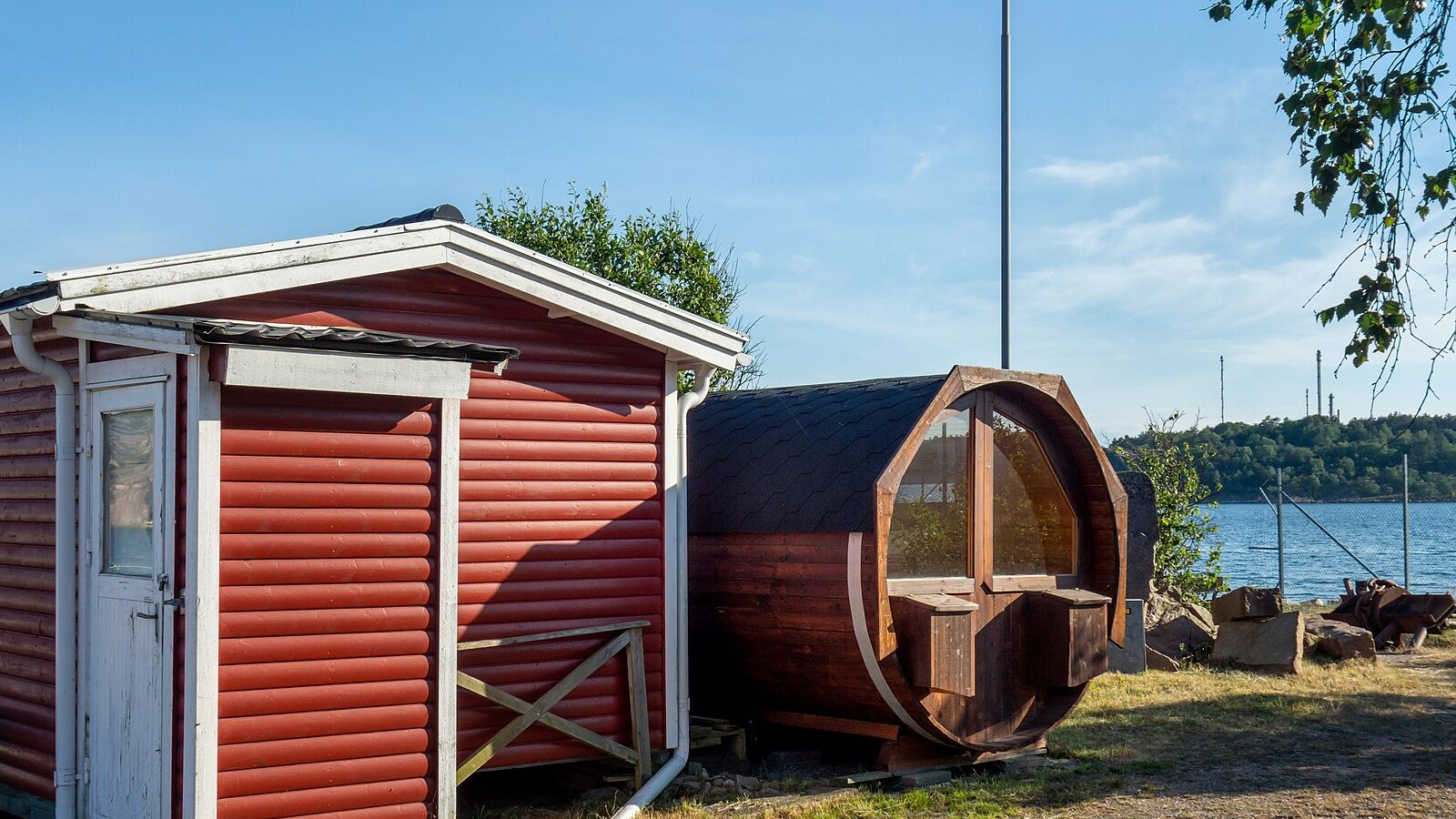
Most barrel and cabin designs come from northern Europe and Canada, where the hard season is a cold one. In a hot, humid place the same kit spends most of the year in sun, rain and damp air, and the wood, the roof and the base take more of the strain.
The wood
Each maker uses a different wood, and they do not age the same way outdoors.
| Maker | Wood | Thickness |
|---|---|---|
| Almost Heaven | Red cedar | 1⅜ in |
| Dundalk LeisureCraft | Eastern white cedar | Not stated |
| Redwood Outdoors | Heat-treated hemlock | 1½ in |
| ALEKO | Cedar or Finland pine | About 1.2 in |
| HOSAUNA | Carbonized spruce (listing) | Not stated |
The USDA Forest Products Laboratory’s Wood Handbook rates cedar heartwood as resistant to decay, and untreated hemlock, spruce and most pines as slightly resistant or not resistant. Heat treatment, which Redwood uses and which “carbonized” usually means in a listing like HOSAUNA’s, improves a wood’s resistance to decay. In a wet climate the species is worth weighing alongside the price.
The roof
Barrel staves shed rain, but the joints between them are not a roof. Almost Heaven’s manual says it plainly: for a fully waterproof barrel, cover it with a shelter or a roofed structure, and the company sells a fitted cover. Redwood Outdoors ships asphalt shingles with its barrels, ALEKO includes shingles, and Dundalk offers a shingle roof as an option. Where summer brings an afternoon storm most days, the roof is part of the purchase.
The base and drainage
A barrel rests on wooden cradles, and those cradles are where water and wood meet. Almost Heaven wants the cradles on paver stones or similar when the barrel sits on the ground, and the whole surface firm and level for 1,000 lb and more. Redwood Outdoors lists concrete, a solid deck, compacted gravel or level pavers, and asks for a moisture barrier under its cabin base. Sun Home asks for drainage “that never pools at the base” under its outdoor cabin.
Rain that runs toward the sauna or stands under it keeps the bottom staves wet. Pick a spot a little higher than its surroundings, or build the pad up.
Drying it out
A sauna dries itself while it is hot. Between uses, on a humid day, it sits closed with damp wood and benches. Leaving the door and vents open after a session, with the heater still warm, lets the moisture out before the room cools. Wipe standing water off the benches and floor.
Heat and sun
In summer the room starts warm. A barrel that has sat in the afternoon sun may be 90 °F inside before the heater comes on, which shortens the warm-up and lowers the running cost. Direct sun on the staves also dries and weathers the outside faster than shade does. A spot with afternoon shade spares the wood.
Storms
None of the barrel makers here publish a method for anchoring a barrel to its pad. In hurricane country, ask the maker how to tie the sauna down, and ask the building department whether an accessory structure of this size needs a permit, anchoring or a setback from the property line. The same office decides the permit for the 240 V circuit running out to it, covered on the electrical page.
The outdoor page compares the barrels and cabins on size, heater and wood.